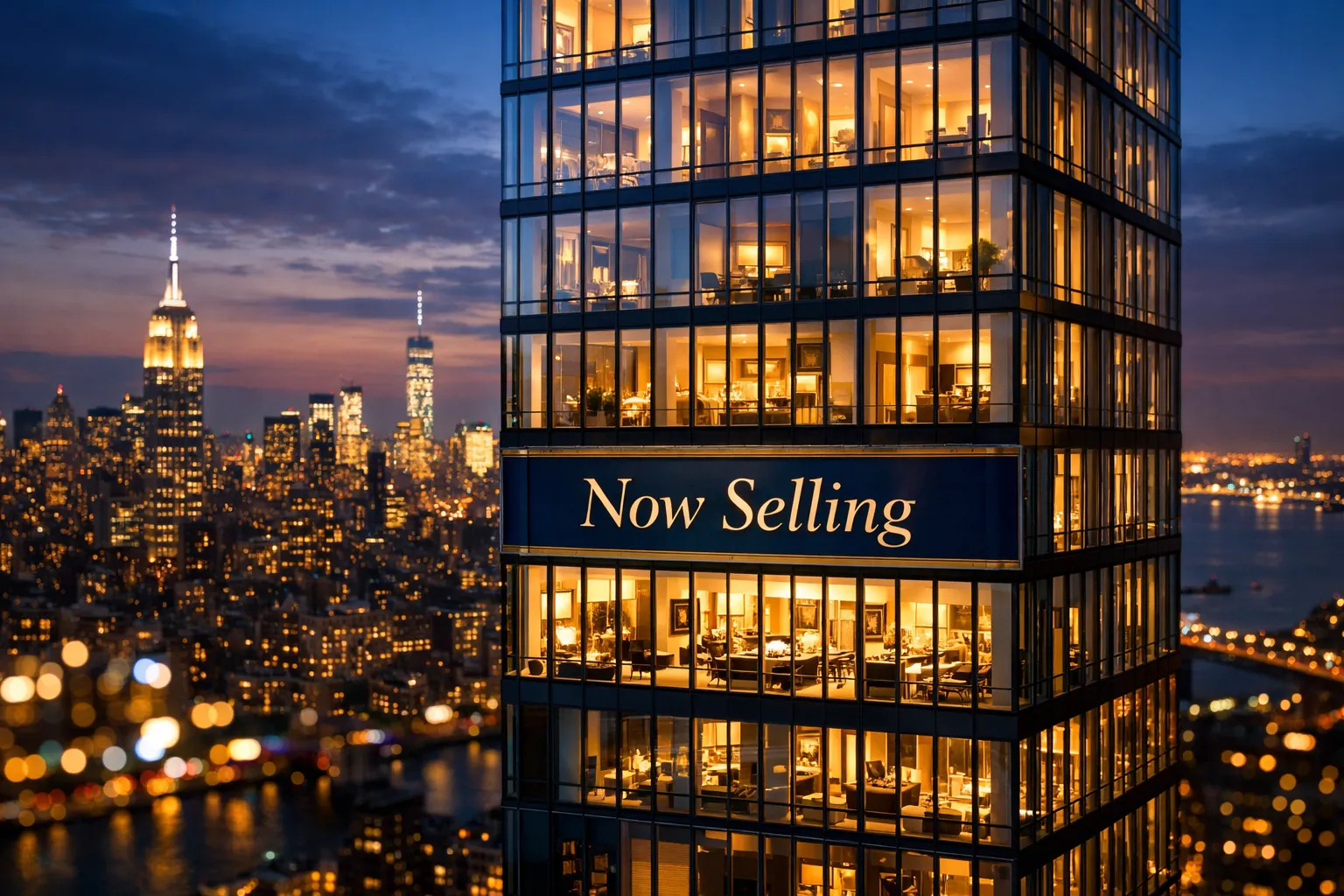
*An early guide to 118 Tenth Avenue, West Chelsea living, and the decisions that matter before a new condominium launches.*
*Research updated October 8, 2026. Project details remain subject to change.*
Introduction: Could Your Next Chapter Begin Near the High Line?
Imagine a Saturday that begins with coffee, continues with a gallery visit, and ends with sunset along the Hudson River. Somewhere between those moments, the appeal of West Chelsea becomes clear: **culture, recreation, and everyday life share the same neighborhood.**
Now another residential development is taking shape in that setting.
Toll Brothers’ proposed project at **118 Tenth Avenue** brings fresh attention to a stretch of Chelsea near the High Line. Commercial Observer reports plans for **105 residences**, alongside commercial space. For buyers considering **West Chelsea new development condos**, the announcement creates an opportunity to begin researching before the sales conversation gathers speed. [Commercial Observer’s October 8 development report].
But what would make a future home here right for you?
A gorgeous address is the beginning. The more valuable question is whether its **layout, location, ownership costs, and delivery schedule** can support the life you want.
Who This Guide Is For—and the Transformation It Offers
This guide serves buyers planning a Manhattan move, renters considering ownership, and investors evaluating future Chelsea condominium opportunities.
**Any buyer considering a West Chelsea condominium can turn an early development announcement into a confident shortlist by comparing daily-life fit, total ownership costs, and verified project milestones, because those checks reveal whether the opportunity supports both personal goals and financial capacity.**
For renters, the transformation is **clarity about when—and whether—to buy**.
For investors, it is **a disciplined way to assess income potential and risk before enthusiasm becomes a purchase commitment**.
The purpose is practical: help you understand the proposed development, experience the surrounding neighborhood, and prepare the questions that will matter when fuller information becomes available.
Toll Brothers’ Chelsea Development: What Is Reported So Far?
The Early Project Snapshot
| Item | Publicly reported detail |
|—|—|
| Developer | Toll Brothers, through Toll Brothers City Living |
| Main development address | 118 Tenth Avenue, West Chelsea |
| Proposed residences | 105, according to Commercial Observer’s account of the filing |
| Reported building area | Approximately 240,000 square feet |
| Reported commercial space | Approximately 20,000 square feet |
| Reported amenities | Pool, sauna, cold plunge, and playroom, with CookFox involved in their design |
| Additional acquisition | Adjacent properties at 126–128 Tenth Avenue and 456 West 18th Street |
| Reported filing date | October 5, 2026 |
The same report says the developer acquired the adjacent properties for **$45 million**, following its **$53 million** purchase of 118 Tenth Avenue earlier in 2026. How the additional parcels will be incorporated remains unclear. [Commercial Observer].
What Still Needs Confirmation?
Treat **105 residences as a reported proposal**, subject to confirmation against the latest project documents.
This guide does not establish:
– Final apartment sizes, bedroom mix, or layouts.
– Asking prices or opening sales incentives.
– Monthly common charges or apartment-specific property taxes.
– Final building height, exterior design, or view conditions.
– Approved permits or construction progress.
– The offering plan’s status and contractual terms.
– A firm sales opening, closing schedule, or move-in date.
**Expert tip:** Keep three separate columns in your research: *reported*, *documented*, and *still unknown*. An unknown is a question to resolve before making a commitment.
Why West Chelsea Deserves a Closer Look
Culture Can Become Part of Your Routine
West Chelsea’s appeal is easy to appreciate on a leisurely afternoon: galleries, distinctive architecture, and proximity to the High Line create a neighborhood with its own tempo.
The real test is more personal.
**Will you use what you are paying to live near?**
A buyer who regularly visits galleries or walks the waterfront may find substantial daily value here. Someone whose priorities center on a short subway commute or a quieter residential block should weigh those needs just as carefully.
The Waterfront Expands Your Living Space
Nearby Hudson River Park destinations offer ways to enjoy the neighborhood beyond your apartment. Pier 57 includes a public rooftop park, indoor gathering space, food offerings, and cultural and educational attractions. [Hudson River Park’s Pier 57 guide].
For some residents, that means room to reset after work, meet friends, or enjoy a lunch break outdoors.
That is a meaningful form of **lifestyle value**: access to places that make an ordinary week more enjoyable.
The Micro-Location Matters More Than the Neighborhood Label
Two Chelsea apartments can offer very different experiences.
A home facing an avenue may have a different sound profile from one facing a courtyard. A lower-floor residence near an elevated public walkway deserves a different privacy assessment from an upper-floor home.
Before choosing a unit, investigate:
– **Window orientation:** What will you actually face?
– **Privacy:** Can neighboring residents or public-space visitors see inside?
– **Light:** How do nearby buildings affect daylight?
– **Noise:** What changes during deliveries, evenings, and weekends?
– **Transit:** How does the full door-to-door commute feel?
– **Future construction:** Could nearby work affect your outlook or routine?
**Proximity to a landmark does not guarantee a view of it.** Evaluate the particular apartment.
Manhattan New Development Market Trends in 2026
Tight Supply Does Not Mean Every Home Will Sell Quickly
Corcoran’s third-quarter 2026 Manhattan report describes limited inventory alongside softer contract activity.
| Manhattan measure | Q3 2026 | Year-over-year movement |
|—|—:|—:|
| Closed sales | 3,625 | Up 9% |
| Median sale price | $1.25 million | Up 4% |
| Active listings | 6,354 | Down 3% |
| Sponsor listings | 564 | Down 22% |
| Signed contracts | — | Down 6% |
*Sponsor listings are homes offered directly by developers. These figures cover Manhattan broadly; they are not Chelsea-specific valuations or estimates for 118 Tenth Avenue.* [Corcoran’s Q3 2026 Manhattan report].
For buyers, the combination suggests a selective market: fewer choices, but continued attention to price and fit.
More New Condos Are Expected to Enter the Market
Brown Harris Stevens Development Marketing’s research, reported by Commercial Observer, counts **3,027 new-development units**, including listed and unlisted inventory, against a **10-year average of 4,209**. It also anticipates **768 units launching during the fourth quarter**, although not all are expected to be publicly listed. [Commercial Observer’s October 7 market report].
Visual Snapshot: Supply and Contracts Are Both Below Their Benchmarks
| Indicator | Comparison | Relative level |
|—|—|—|
| New-development supply | 3,027 units versus a 4,209-unit decade average | **About 72% of the benchmark** |
| Q3 new-development contracts | 240 versus 331 a year earlier | **About 73% of the prior-year level** |
*The same BHSDM research notes incomplete contract reporting. Its inventory definition differs from Corcoran’s sponsor-listing count; the two measures should not be combined.* [Market report and methodology context].
**The buyer’s opportunity:** Compare projects as they emerge. Scarcity today does not determine the competitive landscape when a future building opens.
Three Insights That Can Improve Your Decision
1. A Larger Development Site Creates Possibilities—and Questions
An *assemblage* means combining neighboring properties into a development site.
For a buyer, the useful questions concern what that combination eventually produces: apartment layouts, entrances, commercial uses, setbacks, and the relationship between residential and shared spaces.
**Ask:** “What changed between the earlier proposal and the current plans?”
2. Wellness Amenities Have Two Values
A pool or sauna can make home more enjoyable. It also requires maintenance, staffing, energy, and eventual replacement.
When the budget becomes available, compare:
**Personal use value → Monthly operating cost → Long-term upkeep**
A feature you use regularly may justify its cost. A feature you rarely use still contributes to your ownership expenses.
3. The Best Apartment May Be the One With the Better Daily Experience
A memorable view can attract attention. A comfortable bedroom, usable kitchen, sensible storage, and quiet work area can improve life every day.
Evaluate **how the home works at 7 a.m., 3 p.m., and 10 p.m.**
Luxury becomes more persuasive when it solves something concrete.
Should You Wait for This Development or Buy an Existing Chelsea Condo?
| Your priority | Waiting for a future development may offer | Buying an existing condo may offer |
|—|—|—|
| Move-in certainty | Time to plan, with a schedule still to verify | A completed home and a more immediate closing path |
| Design preferences | Potential access to new layouts and finishes | The ability to inspect the actual apartment |
| Building expenses | An initial projected budget to examine | An operating history and current financial records |
| Views and sound | Plans and representations to investigate | Existing conditions you can experience |
| Negotiation | Opportunities that depend on the eventual launch | Opportunities that depend on the seller and listing history |
| Investment income | A future opportunity to underwrite | Potential earlier income, subject to leasing rules and readiness |
The right choice depends on **your timeline and alternatives**.
If you need to move soon, keep completed properties on your shortlist. If your timing is flexible, following this project can expand your options.
A Buyer’s Due-Diligence Checklist for Chelsea New Construction
Read the Offering Plan Before Signing
The offering plan is the formal disclosure document describing the condominium and the terms of the offering.
The New York Attorney General recommends reading the entire plan and consulting an attorney before signing a purchase agreement. The guidance also explains that buyers should examine the sponsor’s written obligations concerning construction and amenities. [New York Attorney General: Before You Buy a Co-op or Condo].
Ask your attorney to review:
– **Delivery provisions:** What happens if completion takes longer?
– **Deposit terms:** Where is the deposit held, and when can it be returned?
– **Closing conditions:** What must occur before the sponsor can require closing?
– **Amenity commitments:** What is included, and when will it be available?
– **Substitution rights:** Which materials or equipment may change?
– **Building governance:** How does control transition from the sponsor?
Build a Complete Ownership Budget
Include:
– Mortgage principal and interest, if financing.
– Common charges.
– Property taxes.
– Homeowners insurance.
– Utilities and optional service fees.
– A reserve for repairs and unexpected costs.
– Closing expenses identified by your attorney and lender.
Obtain a **written estimate of cash needed at closing**. Clarify any sponsor-requested costs and negotiated concessions.
Confirm the Path to Occupancy
NYC’s Department of Buildings states that a new building cannot be legally occupied until it has a **Certificate of Occupancy or Temporary Certificate of Occupancy**. [NYC DOB occupancy guidance].
Ask how the applicable certificate, unfinished work, amenity completion, and lender requirements affect your particular closing.
Renting in Chelsea While You Prepare to Buy
Renting nearby can help you test the neighborhood before choosing a permanent home.
Pay attention to:
– Your actual commute.
– Grocery shopping and other weekly errands.
– Evening and weekend sound levels.
– How frequently you use parks and cultural destinations.
– Which blocks feel convenient for your routine.
If you are considering renting while waiting for new construction, budget for **lease extensions, moving expenses, and a possible overlap between rent and ownership costs**.
For someone seeking a rental now, this proposed condominium should be treated as neighborhood development news. This guide does not establish apartments available to lease in the future building.
Investor Perspective: What Would Make a Chelsea Condo Worth Buying?
Separate Rental Income From Appreciation
An investment can produce income, gain value, or do both. Each outcome requires its own assumptions.
Begin with:
– Comparable rents for similar completed apartments.
– Vacancy and leasing costs.
– Common charges, taxes, insurance, and owner-paid expenses.
– Rental restrictions in the condominium documents.
– Financing costs.
– Repair and capital reserves.
– Purchase and eventual sale expenses.
– Competition from other rentals and new developments.
**A desirable neighborhood can support demand. Your acquisition price still determines much of the investment math.**
Visual Example: How a Small Change Can Affect Income
*The figures below are hypothetical teaching assumptions. They are not prices, rent estimates, or expense projections for 118 Tenth Avenue.*
Assume a **$2.5 million purchase price**, before acquisition costs:
| Annual measure | Starting assumptions | Stress case: rent falls 10%, operating costs rise 10% |
|—|—:|—:|
| Potential gross rent | $120,000 | $108,000 |
| Vacancy allowance: 5% | −$6,000 | −$5,400 |
| Operating expenses | −$45,000 | −$49,500 |
| **Net operating income** | **$69,000** | **$53,100** |
| **NOI divided by purchase price** | **2.76%** | **2.12%** |
Operating expenses here represent common charges, property taxes, insurance, and routine owner-paid operating costs. The illustration excludes financing, acquisition costs, income taxes, major capital repairs, and sale expenses.
**Net operating income is income after operating expenses and before financing and income taxes.** The percentage shown is a simplified operating yield; it is not total return on investment.
The lesson is useful: modest changes in rent and expenses can meaningfully affect results. Test the numbers before depending on future appreciation.
A Note for 1031 Exchange and DST Investors
A development announcement can be valuable research for an investor watchlist. It does not establish that a future apartment can meet an active exchange deadline.
For a standard deferred **1031 exchange**, IRS instructions generally require written identification within **45 days** and receipt of replacement property by the earlier of **180 days** or the applicable tax-return due date, including extensions. [IRS Form 8824 instructions].
Property must also meet the applicable business or investment-use requirements; a personal residence does not qualify simply because its owner expects appreciation. [IRS guidance on like-kind exchanges], [IRS guidance on selling a home].
**Practical implication:** Coordinate with your qualified intermediary, tax adviser, and attorney before relying on a future construction closing.
This guide identifies no **Delaware Statutory Trust—or DST—offering** associated with the project. A proposed condominium should be evaluated through its own ownership documents and financial analysis.
Pros and Cons of Following This West Chelsea Development
Potential Advantages
– **Time to prepare:** Build your budget and shortlist before fuller sales information arrives.
– **Neighborhood appeal:** Explore a location connected to culture and waterfront recreation.
– **Possible new-home convenience:** Evaluate modern layouts, systems, and amenities when documented.
– **Comparison opportunities:** Use the eventual offering to assess other Chelsea properties more clearly.
Potential Tradeoffs
– **Timing uncertainty:** Your move may need to happen before delivery.
– **Unknown costs:** Pricing, taxes, and common charges still require verification.
– **Construction exposure:** Nearby work may affect access, sound, or outlook.
– **Privacy considerations:** Individual residences may experience proximity to public spaces differently.
– **Investment sensitivity:** Strong lifestyle appeal can coexist with modest rental income.
– **Future competition:** Other developments may create alternatives for buyers and tenants.
What Could Happen Next?
Watch for **evidence that changes a decision**:
| Milestone | Why it matters |
|—|—|
| Updated plans and approvals | Clarify the project’s scope and progress |
| Official developer materials | Establish the current proposed design and positioning |
| Offering plan and amendments | Reveal terms, budgets, restrictions, and obligations |
| Released layouts and pricing | Allow meaningful apartment comparisons |
| Construction progress | Helps assess the delivery path |
| Occupancy documentation | Becomes central to move-in readiness |
If prices and layouts compare favorably with completed alternatives, interest may strengthen. If costs are high or delivery remains uncertain, buyers may prefer existing homes.
**These are scenarios to evaluate as evidence arrives.**
Frequently Asked Questions
Are the 105 Residences Available to Buy Now?
This guide has not verified an active sales release or available inventory. Confirm current availability through official project representatives before making plans.
What Will Apartments at 118 Tenth Avenue Cost?
Verified apartment pricing was not established for this guide. Manhattan averages cannot determine the value of a particular future residence.
Will Every Apartment Have a High Line or Hudson River View?
That has not been established. Views depend on the unit’s floor, orientation, surrounding buildings, and future development.
Does a New Building Automatically Mean Lower Ownership Costs?
New systems may reduce some immediate repair needs. Extensive services and amenities can add substantial operating expenses. Examine the actual budget.
Will the Development Raise Nearby Property Values?
Its eventual effect will depend on pricing, absorption, broader demand, and the properties being compared. A development announcement alone does not establish appreciation.
Conversation Starters for Your Next Property Consultation
– **“Which three parts of my weekly routine should my next home improve?”**
– **“What monthly ownership cost would let me enjoy the neighborhood comfortably?”**
– **“How much flexibility do I have if delivery takes longer?”**
– **“Would I choose this location without the amenity package?”**
– **“Which completed apartments should we compare with the eventual launch?”**
– **“If I later rent or sell, what would make this particular unit competitive?”**
These questions turn an exciting headline into a useful conversation.
Agent Takeaway: Translate the News Into a Personal Decision
The professional value of this story lies in connecting development news to **a client’s requirements**.
For a buyer, that might mean tracking layouts while comparing completed homes. For a renter, it might mean testing the neighborhood. For an investor, it means assembling rental evidence and expense assumptions before discussing returns.
The most useful presentation answers:
**What fits? What conflicts? What remains unknown?**
That approach builds trust because the client can see how the advice connects to their life.
Agent Play: Build a One-Page Chelsea Comparison
For a buyer consultation or listing presentation, compare the future development with two relevant completed properties.
Record:
1. **Lifestyle fit:** Commute, recreation, privacy, and everyday convenience.
2. **Apartment fit:** Layout, light, storage, and usable space.
3. **Financial fit:** Price, monthly costs, closing cash, and investment assumptions.
4. **Timing fit:** Desired move versus the documented delivery path.
5. **Evidence:** Source, check date, and the next milestone requiring a refresh.
For a nearby seller, use future development as context while grounding the asking-price discussion in **relevant closed sales and current competing listings**.
Keeping This Chelsea Guide Useful Over Time
The questions in this guide will remain useful as the project evolves. Its factual snapshot should be refreshed when there are material changes to:
– Residence count or development scope.
– Approvals and construction status.
– Official layouts, amenities, and pricing.
– Offering-plan terms and projected expenses.
– Sales and occupancy schedules.
– Comparable sales, rental evidence, and competing launches.
*Project specifics above reflect cited reporting. Permit approvals, offering-plan status, final costs, and delivery dates were not independently established for this guide.*
Explore Chelsea With a Clearer Plan
West Chelsea offers a compelling possibility: **comfort, culture, and Manhattan energy woven into daily life**.
Whether your next step is renting nearby, buying a completed condominium, or following Toll Brothers’ Tenth Avenue development, a thoughtful comparison can help you choose a home that supports both your aspirations and your budget.
Visit [NYC Exclusive Apartments] —**Your Premier Bridge to Manhattan Living and Wealth**—or call or message **Sydney Harewood at 646-535-3819** to discuss your Chelsea priorities and build a personalized property comparison.